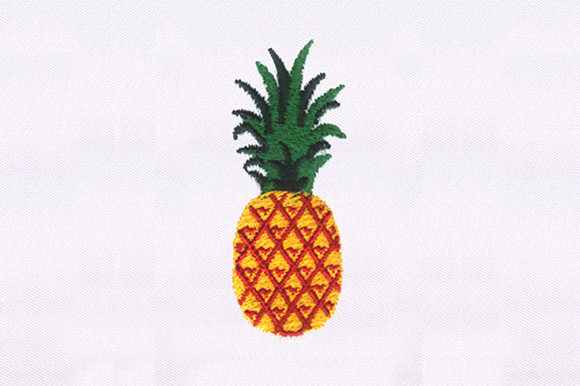
Fruity Pineapple: A Craft Fair Designer's Review
As an embroidery designer preparing for a weekend craft fair, my first task is to review each design not just for its aesthetics, but for its real-world selling potential. Today, I’m looking at the Fruity Pineapple machine embroidery design. The name alone suggests a playful, cheerful motif, leaning towards a cute and modern farmhouse aesthetic that’s incredibly popular right now. This isn’t a minimalist or overly elegant design; it feels bold, decorative, and inherently giftable—perfect for capturing customer attention from across a busy booth.
First Impressions and Product Placement
When I envision my booth display—tote bags, aprons, tea towels, caps, and small pouches all neatly arranged—Fruity Pineapple immediately stands out as a candidate for kitchen and lifestyle products. Its subject matter naturally aligns with the Food category, but its appeal is broader. On a crisp, natural-colored apron or a market bag, it shouts “fresh” and “fun.” On a pillow cover, it becomes a charming decorative accent for a sunroom or kitchen. This versatility is key for maximizing a single embroidery file across multiple craft fair products.
I would prioritize it on items customers touch and use: a high-quality tea towel feels more premium with this cheerful embroidery, and a fabric pouch becomes a delightful handmade gift. For caps, it needs evaluation—pineapples have a defined shape that might need adaptation for curved surfaces, but as a central motif on a flat-front cap, it could work brilliantly.
Performance Across Key Products
Let’s break down how Fruity Pineapple performs on specific items, thinking about both appeal and production.
Tote Bags and Aprons
These are my bread and butter. For a tote bag design, this needs to be a focal point, positioned centrally. It should be sized to be clearly recognizable from a few feet away—a customer scanning a table will lock onto a well-executed, bright pineapple. On aprons, placement on the bib or pocket is ideal. The design’s likely density will hold up well on the sturdy canvas of a bag or the twill of an apron, provided the right stabilizer is used.
Tea Towels and Pillow Covers
Here, the fabric texture matters. On a textured tea towel, smaller details might get lost. I’d recommend testing the design at a slightly larger scale on scrap towel fabric to ensure the stitch density is sufficient for clarity. For a pillow cover, it offers a wonderful repeatable opportunity—you could create a set with complementary fruity designs. It photographs beautifully for Etsy listings against a light linen, adding perceived handmade quality.
Patches and Small Pouches
As an embroidered patch, Fruity Pineapple has strong potential for a playful, appliqué-style finish. However, this is where we must be most cautious. The design description includes many embroidery file formats (DST, PES, etc.), but I don’t have specifics on stitch count or intricate detail size. Before committing, I must stitch it out as a patch on scrap fabric to check for tiny elements or lettering that could become fuzzy at a small scale. A clean, bold patch sells well; a muddy one does not.
Practical Selling and Production Points
Beyond where it looks good, I judge a design by how smoothly it turns into sellable inventory.
Visual Clarity and Batch Production: Fruity Pineapple seems like a design easily understood at a glance—no complex symbolism. This is vital for quick customer engagement at the fair. If the design is not overly complex with thousands of stitches, it could be a great candidate for batch production on a stack of tea towels or pouches, maintaining brand consistency across your small shop product line.
Photography and Online Sales: For my Etsy seller side, bright, fruity motifs pop in listing photos. I’d create a real, physical mockup—not just a printable mockup—on a tote bag to photograph. The tangible texture of the embroidery, especially with good thread contrast on dark fabric, elevates the product value online.
Careful-Use Notes for the Embroidery Designer
Here are my internal checklist items before I hooped the first product:
- Test on Scrap: Always stitch the design on a scrap of the actual fabric you’ll use—be it thick bag cotton or a textured towel.
- Check Density and Detail: Inspect the stitch out for overly dense areas (which can pucker fabric) or minute details that vanish on smaller items like caps or pouches.
- Confirm Hoop Size: While the provided embroidery file formats (like ART, HUS, VIP) indicate broad compatibility, the ideal hoop size for production efficiency isn’t stated. I need to open the file in my software and determine the most efficient hoop for my target product size.
- Stabilizer and Fabric Color: A design like this may need a firm cut-away stabilizer on stretchy or textured fabrics. Also, compare how it looks on light versus dark fabric; sometimes a bright design needs a white or light backing thread on dark materials.
- Commercial Licensing: This is a critical final step. Before selling any finished product, I must confirm the digital embroidery file comes with a license for commercial embroidery and resale of the physical items. This is not inferred from the file formats alone.
Final Booth Display Strategy
In my final booth layout, I would place Fruity Pineapple products in a grouped “Kitchen & Home” section. A standout tote bag would hang at the front, a set of embroidered tea towels would be neatly folded and stacked, and perhaps a cap displayed on a stand. This clustering creates a thematic story, boosting booth display strength and encouraging multiple-item purchases. The design’s cheerful, premium feel directly enhances customer attention and buyer engagement—it’s a conversation starter about summer, cooking, or tropical vibes.
Ultimately, Fruity Pineapple presents a strong opportunity for craft fair sellers. Its subject matter is universally likable and currently trendy. By carefully testing it on target materials, respecting the nuances of different fabric textures and product shapes, and confirming its commercial use rights, this machine embroidery design can become a reliable, profitable part of your handmade market offerings.