A Real-World Review of the Three Blades Ceiling Fan Redwork
First Impressions: Quiet Charm with a Practical Twist
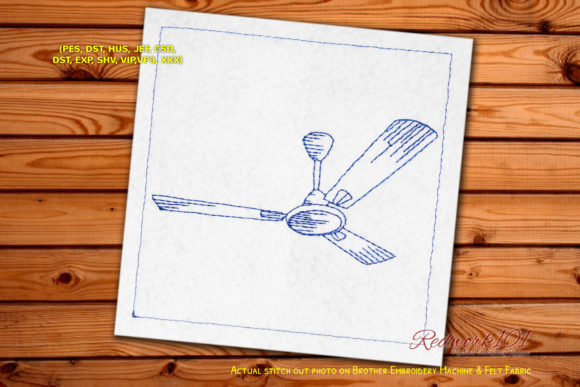
When I first opened the Three Blades Ceiling Fan Redwork embroidery file, my immediate thought was, "This is quietly clever." The design doesn’t shout for attention; it earns it. The single-line redwork style gives it a classic, almost nostalgic feel, perfect for a handmade product. The subject itself—a simple ceiling fan—is wonderfully unexpected. It’s not a florid motif or a trendy slogan. It’s a slice of everyday life, rendered with a clean, illustrative line. That creates a mood of cozy familiarity, something that feels both personal and universal. The layout is straightforward, with the fan centered, which makes it incredibly versatile for placement on various products.
The Optional Box Stitch: A Designer's Choice
A key note from the description is that the box stitch shown is optional, and its color is typically different unless part of the design itself. This is a significant point for us as embroidery designers. It means the core design is the fan outline, and the box acts as a potential frame. In practice, this gives you creative control. You can skip it entirely for a cleaner, more integrated look, or use it in a contrasting color to create a deliberate "patch-like" or "label" effect. This flexibility directly impacts what kind of finished product you're creating.
Where This Design Finds Its Home: Project Scenarios
Let's walk through a real scenario. Imagine you're preparing a batch of custom embroidered kitchen towels for a local craft fair or your Etsy shop. You want something that feels homey, slightly whimsical, and speaks to the heart of the home. The Three Blades Ceiling Fan Redwork is a perfect candidate. Stitched in a brick red or a deep navy on a crisp white tea towel, it becomes a subtle, charming accent. It’s not overwhelming; it’s a decorative detail that suggests comfort and routine.
This same principle applies across a wide range of handmade products. On the breast of a soft, cotton baby onesie, it becomes a unique, gentle graphic for nursery wear. Stitched onto a canvas tote bag, it adds a touch of personality without being too loud. For a personalized gift, like a pillow cover for someone who loves their cozy reading nook, it’s uniquely fitting. It wouldn’t be my first choice for a bold, statement sweatshirt, but for aprons, simple caps, blanket corners, or boutique kitchen merchandise, it has a natural affinity. It feels authentic.
Considering the Commercial Angle
For small business owners and Etsy sellers, the design's clarity is a plus. When customers see it stitched on a product, the clean lines convey a sense of craftsmanship. There's no dense fill stitch area that might look bulky or cheap on thinner fabrics. This maintains product value and customer trust in your workmanship. In a printable mockup for your digital product listing, the simple outline renders clearly, giving potential buyers a confident preview of the embroidery file they're purchasing.
Points of Care: Stitching with Confidence
While the design is beautifully simple, any embroidery project requires practical forethought. The redwork style, being primarily running stitch or a similar single-line stitch, is generally forgiving, but attention to detail matters.
Fabric choice is paramount. On highly textured fabrics like terry cloth or loose-weave linen, the fine lines might get lost. On thin or stretchy fabric without adequate stabilizer, the stitches could distort. I would avoid using it on very dark fabric unless you choose a dramatically contrasting, bright thread color—the subtle charm might disappear. For curved surfaces like caps, the centered, symmetrical layout should work well, but always test the hoop size and placement on a scrap first.
The description doesn't provide exact stitch counts or density, which is fine. But the implication of "redwork" suggests lower density. This is good news for frequent washing products like towels or baby clothes—less stitch bulk often means better durability and less puckering. However, you must inspect the small details. Are the fan blade tips sharp and clean? Does the optional box have tiny corners that might need careful stitch execution? Always test the design on scrap fabric first with your chosen thread colors.
A Note on Visual Appeal and Professionalism
Using this design effectively boosts your brand consistency if your shop vibe is "quietly clever" or "home-centered." It feels more like a curated design asset than a generic clipart. For giftability, it scores high because it’s unique—it’s not a design you see everywhere, which makes the finished product feel more thoughtful. This uniqueness aids in recognition for your craft business.
Essential Designer Checks Before You Stitch
Before you run this file for a client project or your next batch of small shop merchandise, make these practical checks:
- Test on both light and dark fabric backgrounds if you plan to use it across product lines. See how the thread color interacts.
- Confirm the actual hoop size required. Even simple designs need appropriate framing.
- If using the optional box, decide on its purpose. Is it a frame? If so, pick a contrasting color. Is it integrated? Then match the fan color.
- Always use proper stabilizer suited to your base fabric. This preserves the clarity of those clean lines.
- Check the licensing of the digital embroidery file. Ensure it allows for commercial embroidery and selling the finished products if that's your intent.
- Consider creating a embroidered patch version. The optional box could make this design ideal for a standalone patch applied to various items.
Final Realistic Judgment
The Three Blades Ceiling Fan Redwork is a solid, charming design for specific niches within the House and gift categories. It won’t be a flashy bestseller, but for the right maker and the right customer, it will be a beloved, understated detail. Its value lies in its authenticity and flexibility. As an experienced designer, I see it as a reliable tool in my library for when I need to create something that feels genuinely handmade, personal, and subtly tied to the comfort of home. It’s a design that, when stitched well on an appropriate product, tells a small, sweet story without saying a word.